Stress Management
W. Ali Ahmed, MD Medicine (I), Michael Murray, ND, Joseph Pizzorno, ND
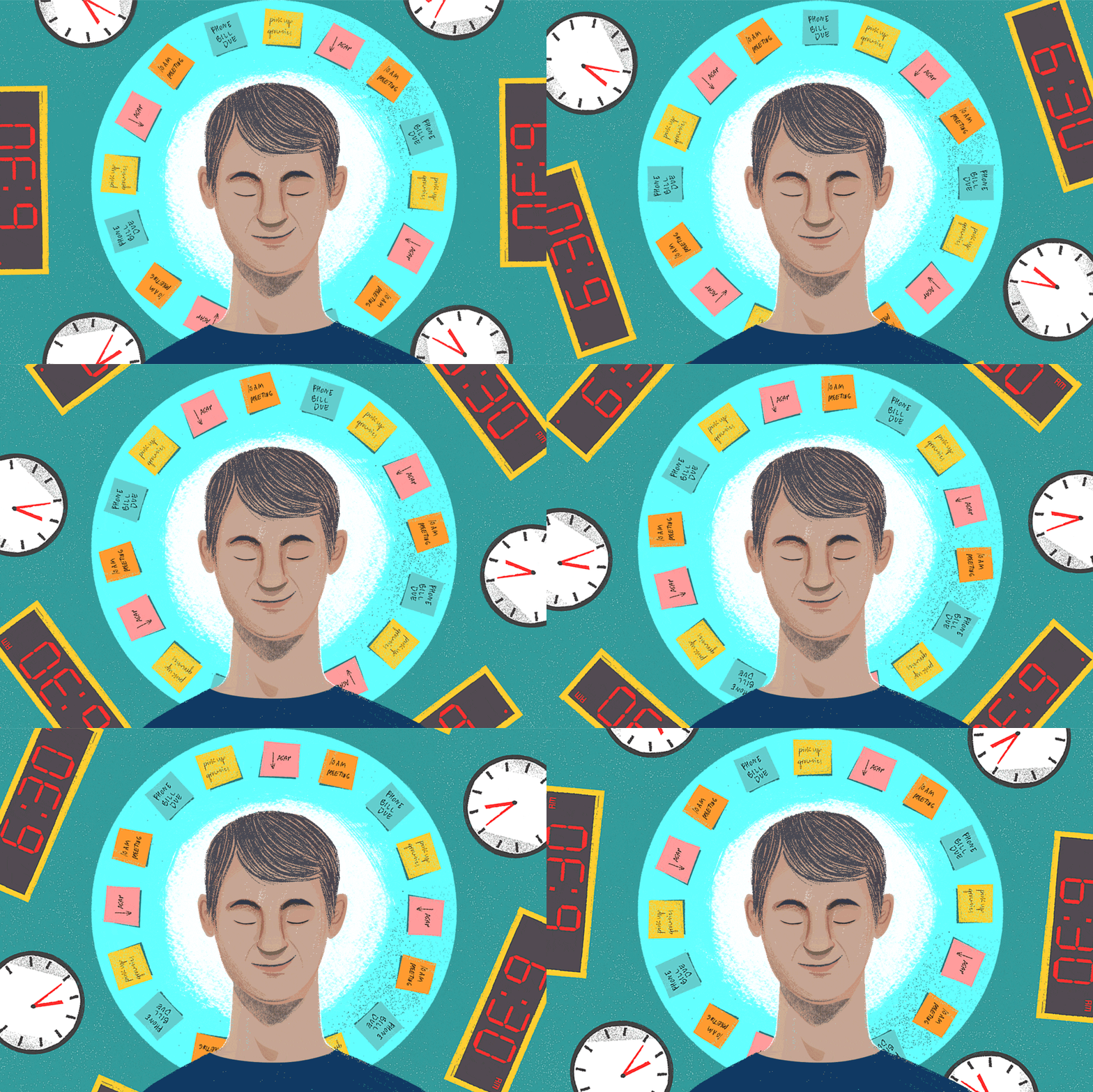
Overview: Stress Management
Stress produces a biological response.
Prolonged stress puts a heavy load on many organ systems, especially the heart, blood vessels, adrenals, and immune system.
Learning to calm the mind and body is critical for relieving stress.
One of the most effective ways to reduce stress and boost energy is diaphragmatic breathing.
Lifestyle is a major factor in determining stress levels.
In addition to correcting negative coping habits, the main areas to focus on are:
Time management
Relationship issues
Key dietary recommendations:
Eliminate or restrict caffeine.
Eliminate or restrict alcohol.
Eliminate refined carbohydrates.
Increase the potassium-to-sodium ratio in the diet.
Eat regular, planned meals in a relaxed environment.
Control food allergies.
Ginseng helps improve the body’s ability to handle stress.
Important points to consider
Comprehensive stress management involves several approaches:
Identify stressors
Eliminate or reduce sources of stress
Identify negative coping patterns and replace them with positive patterns
Perform a relaxation/breathing exercise for a minimum of five minutes twice daily
Manage time effectively
Enhance relationships through better communication
Get regular exercise
Get regular neck and back massages (Dr. Ali's Neck Connection treatment and the Ali Technique massage).
Follow these dietary guidelines:
Eliminate or restrict the intake of caffeine
Eliminate or restrict the intake of alcohol
Eliminate refined carbohydrates from the diet
Increase the potassium-to-sodium ratio
Eat regular, planned meals in a relaxed environment
Control food allergies
Additional measures:
Use adrenal supportive therapy, as described in the following section
Nutritional Supplements:
Follow the recommendations given below.
"One of the most powerful ways to decrease stress and increase energy in the body is by breathing with the diaphragm. By using the diaphragm to breathe, a person’s physiology can be dramatically changed, literally activating the relaxation centers in the brain."

Botanical Medicines
• Panax ginseng
High-quality crude ginseng root:
1–2 g, one to three times per day
Standardized extract (5% ginsenosides):
100 mg, one to three times per day
• Eleutherococcus senticosus
(Dosages are three times per day)
Dried root: 2–4 g
Tincture (1:5): 10–20 ml
Fluid extract (1:1): 2–4 ml
Solid (dry powdered) extract (20:1): 100–200 mg
Additional Notes:
Each individual’s response to ginseng is unique.
Be alert for possible ginseng toxicity — symptoms include:
Irritability
Nervousness
Insomnia
Begin with lower doses and increase gradually.
The Russian approach for long-term use of Chinese or Siberian ginseng:
Use ginseng cyclically for 15–20 days, followed by a two-week break without ginseng.
This allows the adrenal glands time to rest.
Conditions Linked to Stress
Angina
Asthma
Autoimmune disease
Cancer
Cardiovascular disease
Common cold
Depression
Diabetes (adult onset, Type II)
Headaches
Hypertension
Immune suppression
Irritable bowel syndrome
Menstrual irregularities
Premenstrual tension syndrome
Rheumatoid arthritis
Ulcerative colitis
Ulcers
The Social Readjustment Rating Scale
Rank | Life Event | Mean Value |
|---|---|---|
1 | Death of spouse | 100 |
2 | Divorce | 73 |
3 | Marital separation | 65 |
4 | Jail term | 63 |
5 | Death of a close family member | 63 |
6 | Personal injury or illness | 53 |
7 | Marriage | 50 |
8 | Fired at work | 47 |
9 | Marital reconciliation | 45 |
10 | Retirement | 45 |
11 | Change in health of family member | 44 |
12 | Pregnancy | 40 |
13 | Sex difficulties | 39 |
14 | Gain of a new family member | 39 |
15 | Business adjustment | 39 |
16 | Change in financial state | 38 |
17 | Death of a close friend | 37 |
18 | Change to different line of work | 36 |
19 | Change in number of arguments with spouse | 35 |
20 | Large mortgage | 31 |
21 | Foreclosure of mortgage or loan | 30 |
22 | Change in responsibilities at work | 29 |
23 | Son or daughter leaving home | 29 |
24 | Trouble with in-laws | 29 |
25 | Outstanding personal achievement | 28 |
26 | Wife begins or stops work | 26 |
27 | Begin or end school | 26 |
28 | Change in living conditions | 25 |
29 | Revision of personal habits | 24 |
30 | Trouble with boss | 23 |
31 | Change in work hours or conditions | 20 |
32 | Change in residence | 20 |
33 | Change in schools | 20 |
34 | Change in recreation | 19 |
35 | Change in church activities | 19 |
36 | Change in social activities | 18 |
37 | Small mortgage | 17 |
38 | Change in sleeping habits | 16 |
39 | Change in number of family get-togethers | 15 |
40 | Change in eating habits | 15 |
41 | Vacation | 13 |
42 | Christmas | 12 |
43 | Minor violations of the law | 11 |
Negative Coping Patterns
Dependence on chemicals
Drugs, legal and illicit
Alcohol
Smoking
Overeating
Watching too much television
Emotional outbursts
Feelings of helplessness
Overspending
Excessive behavior
The Stress Response vs.The Relaxation Response
The Stress Response | The Relaxation Response |
|---|---|
The heart rate and force of contraction of the heart increase to provide blood to areas necessary for response to the stressful situation. | The heart rate is reduced and the heart beats more effectively. Blood pressure is reduced. |
Blood is shunted away from the skin and internal organs (except the heart and lungs), while the amount of blood supplying oxygen and glucose to the muscles and brain increases. | Blood is shunted toward internal organs, especially those involved in digestion. |
The rate of breathing increases to supply necessary oxygen to the heart, brain, and exercising muscles. | The rate of breathing decreases as oxygen demand is reduced during periods of rest. |
Sweat production increases to eliminate toxic compounds produced by the body and to lower body temperature. | Sweat production decreases, as a person who is calm and relaxed does not experience nervous perspiration. |
Production of digestive secretions is severely reduced since digestive activity is not critical for counteracting stress. | Production of digestive secretions is increased, greatly improving digestion. |
Blood sugar levels increase dramatically as the liver releases stored glucose into the bloodstream. | Blood sugar levels are maintained within the normal physiological range. |
Diaphragmatic Breathing
Producing deep relaxation with any technique requires learning how to breathe. One of the most powerful ways to decrease stress and increase energy in the body is by breathing with the diaphragm. By using the diaphragm to breathe, a person’s physiology can be dramatically changed, literally activating the relaxation centers in the brain.
Here is a popular way to learn to breathe with your diaphragm:
Find a quiet, comfortable place to sit or lie down.
Place your feet slightly apart. Place one hand on your abdomen near your navel. Place the other hand on your chest.
Inhale through your nose and exhale through your mouth.
Concentrate on your breathing. Notice which hand is rising and falling with each breath.
Gently exhale most of the air in your lungs.
Inhale while slowly counting to four. As you inhale, slightly extend your abdomen, causing it to rise about 1 inch. Make sure that you are not moving your chest or shoulders.
As you breathe in, imagine the warmed air flowing in. Imagine this warmth flowing to all parts of your body.
Pause for one second, then slowly exhale to a count of four. As you exhale, your abdomen should move inward.
As the air flows out, imagine all your tension and stress leaving your body.
Repeat the process until you achieve a sense of deep relaxation.
Lifestyle Factors
Lifestyle is a major determinant of an individual’s stress levels. In addition to addressing negative coping patterns, the two primary areas of concern are time management and relationship issues.
Time Management
One of the biggest stressors for most people is time; they simply feel they do not have enough of it. Here are some tips on time management:
Set priorities.
Realize that you can only accomplish so much in a day. Decide what is most important, and limit your efforts to that goal.Organize your day.
There are always interruptions and unplanned demands on your time, but create a definite plan for the day based on your priorities.
Avoid the pitfall of always letting the immediate demands control your life.Delegate as much authority and work as you can.
You can’t do everything yourself. Learn to train and depend on others.Tackle tough jobs first.
Handle the most important tasks first while your energy levels are high. Leave the busywork or running around for later in the day.Minimize meeting time.
Schedule meetings to bump up against the lunch hour or quitting time; that way they can’t last forever.Avoid putting things off.
Work done under the pressure of an unreasonable deadline often has to be redone. That creates more stress than if it had been done right the first time. Plan ahead.Don’t be a perfectionist.
You can never really achieve perfection anyway. Do your best in a reasonable amount of time and then move on to other important tasks.
If you find time, you can always come back later and polish the task some more.
Relationship Issues
Another major cause of stress for many people is interpersonal relationships. Relationships can be divided into three major categories: marital, family, and job-related. The quality of any relationship ultimately comes down to the quality of the communication. Learning to communicate effectively goes a long way toward reducing the stress and conflicts of interpersonal relationships.
Here are some tips for effective communication, regardless of the type of relationship:
The first key to successful communication is the most important: learn to be a good listener. Allow the people you are communicating with to really share their feelings and thoughts uninterrupted. Empathize with them; put yourself in their shoes. If you first seek to understand, you will find yourself being better understood.
Be an active listener.
This means that you must act really interested in what the other person is communicating. Listen to what is being said instead of thinking about your response. Ask questions to gain more information or clarification; good questions open lines of communication.Be a reflective listener.
Restate or reflect back to the other person your interpretation of what he or she is telling you. This simple technique shows the other person that you are both listening and understanding. Restating what you think is being said may cause some short-term conflict in some situations, but it is certainly worth the risk.Wait to speak until the people you want to communicate with are listening.
If they are not ready to listen, you will not be heard no matter how well you communicate.Don’t try to talk over somebody.
If you find yourself being interrupted, relax; don’t try to out-talk the other person. If you are courteous and allow people to speak, all but the rudest ones will eventually respond in kind. If they don’t, point out that they are interrupting the communication process. You can only do this if you have been a good listener; double standards in relationships seldom work.Help other people to become active listeners.
This can be done by asking if they understood what you were communicating. Ask them to tell you what they heard. If they don’t seem to understand what you are saying, persist until they do.Don’t be afraid of long silences.
Human communication involves much more than words; a great deal can be communicated during silences. Unfortunately, in many situations, silence can make us feel uncomfortable. Relax. Some people need silence to collect their thoughts and feel safe in communicating. The important thing to remember during silences is to remain an active listener.
Exercise
The immediate effect of exercise is to cause stress on the body. However, with a regular exercise program the body adapts. The body’s response to this regular stress is to become stronger, function more efficiently, and have greater endurance. Exercise is a vital component of a comprehensive stress management program and of overall good health.
People who exercise regularly are much less likely to suffer from fatigue and depression. Tension, depression, feelings of inadequacy, and worries diminish greatly with regular exercise. Exercise alone has been demonstrated to have a tremendous impact on improving mood and the ability to handle stressful life situations.
Key Sources
Encyclopedia of Natural Medicine, Michael Murray, N.D., Joseph Pizzorno, N.D.
Dr. Ali's Integrated Health Bible
Read more